


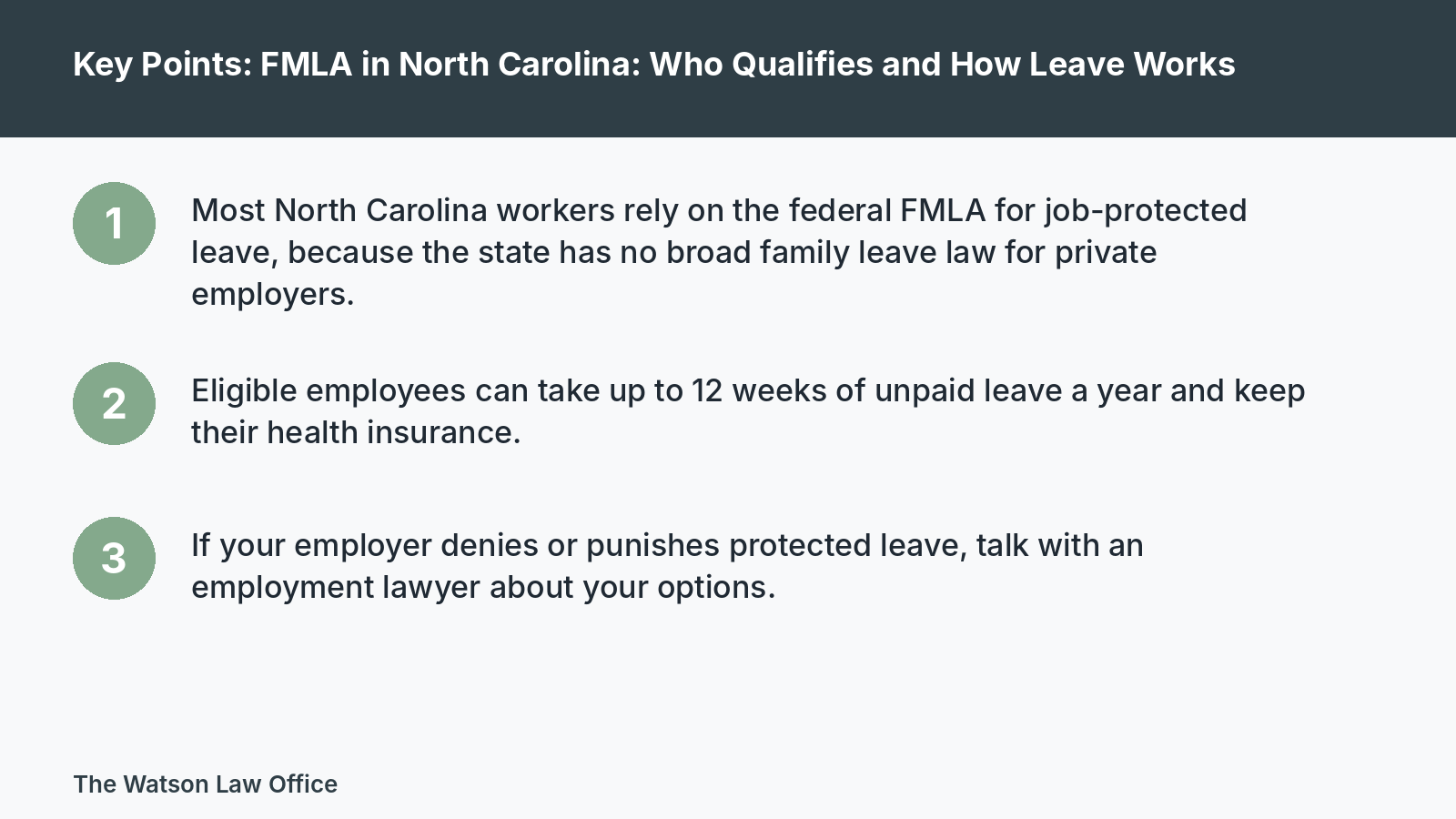
Most North Carolina workers rely on the federal FMLA for job-protected leave, because the state has no broad family leave law for private employers. Eligible employees can take up to 12 weeks of unpaid leave a year and keep their health insurance. If your employer denies or punishes protected leave, talk with an employment lawyer about your options.
Reviewed by Kyle T. Watson, founder and managing attorney at The Watson Law Office. Last reviewed November 2026.
Most North Carolina workers who need job-protected leave for a serious health condition, a new child, or a family member’s illness rely on the federal Family and Medical Leave Act. North Carolina does not have a broad state family leave law for private employers. Under the FMLA, eligible employees can take up to 12 weeks of unpaid, job-protected leave in a 12-month period, with health insurance continued and the right to return to the same or an equivalent job. Employers cannot interfere with FMLA rights or retaliate against employees who use them.
Workers in Charlotte and across North Carolina often learn about FMLA only after a diagnosis, a difficult pregnancy, or a parent’s decline. Knowing the rules ahead of time helps you protect your job while you take care of yourself or your family.
Who Is Eligible
Requirement | What It Means |
|---|---|
Covered employer | Private employers with 50 or more employees, plus public agencies and schools |
Length of employment | At least 12 months with the employer, not necessarily consecutive |
Hours worked | At least 1,250 hours in the 12 months before leave starts |
Location | Work at a site where the employer has 50 or more employees within 75 miles |
Reasons You Can Take FMLA Leave
- Your own serious health condition that makes you unable to work
- Caring for a spouse, child, or parent with a serious health condition
- The birth of a child and bonding within the first year
- Adoption or foster placement of a child
- Certain needs arising from a family member’s military deployment
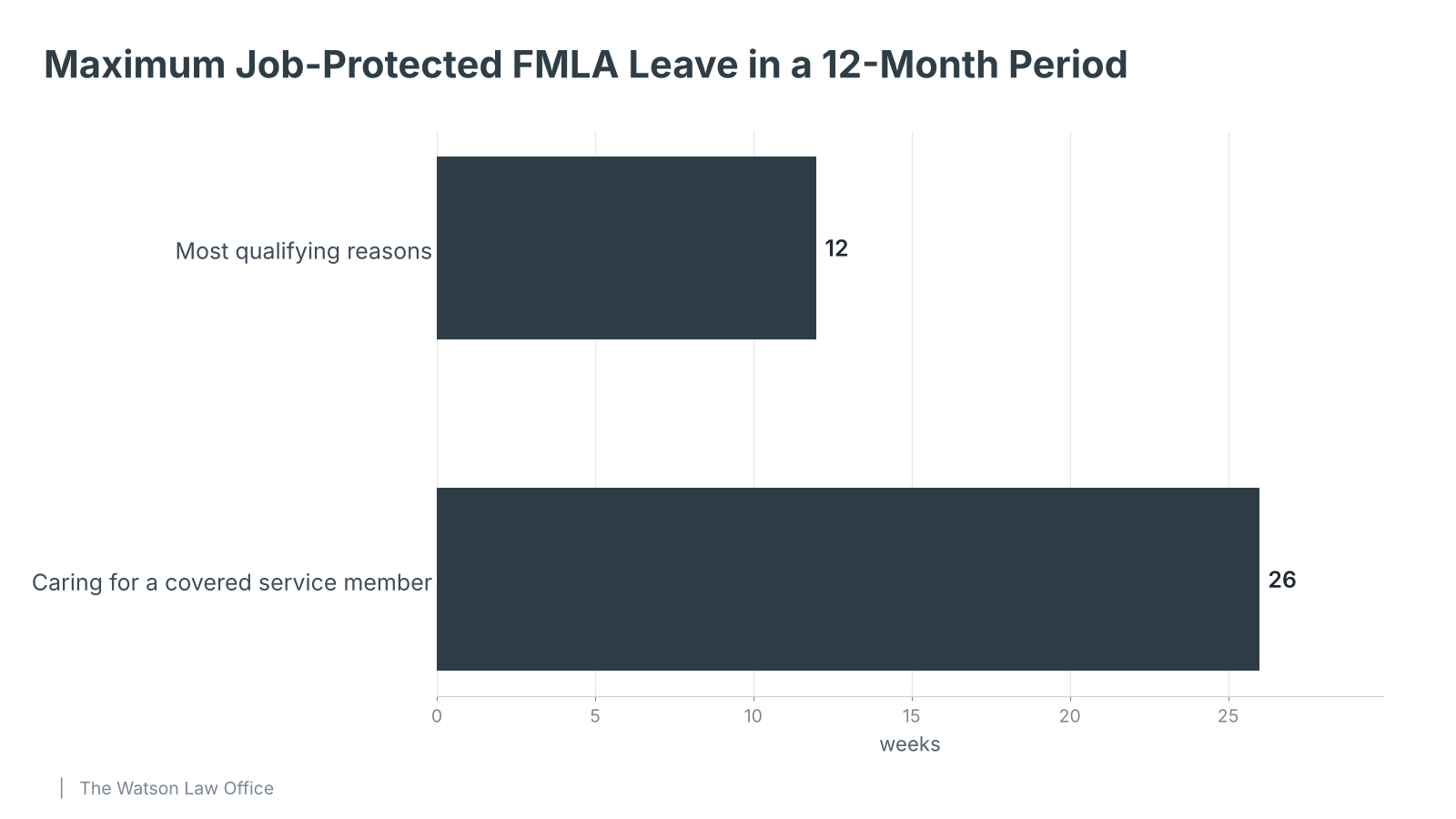
- Caring for a covered service member with a serious injury or illness, which allows up to 26 weeks
How Leave Can Be Taken
FMLA leave does not have to be taken all at once. Employees can take intermittent leave, such as time off for chemotherapy treatments or flare-ups of a chronic condition, or use a reduced schedule when medically necessary. Leave for bonding with a new child is generally taken in a block unless the employer agrees otherwise.
Notice and Medical Certification
When leave is foreseeable, employees generally must give 30 days’ notice. When it is not, employees should give notice as soon as practicable. Employers may require a medical certification from a health care provider, and employees typically have at least 15 calendar days to return it. Failing to provide required certification can affect FMLA protection, so keep track of deadlines.
Pay, Benefits, and Your Job
FMLA leave is unpaid, though employers may require or allow you to use accrued paid leave during it. Your group health insurance must continue on the same terms as if you were working. When leave ends, you generally must be restored to the same job or an equivalent position with the same pay, benefits, and working conditions.
FMLA Interference and Retaliation
Employers violate the FMLA when they deny leave to an eligible employee, discourage an employee from taking leave, count FMLA absences against the employee, fail to restore the employee to their job, or fire or discipline someone for using leave. Remedies can include back pay, lost benefits, an equal amount in liquidated damages in many cases, reinstatement, and attorney fees. FMLA claims generally must be filed within two years, or three years for willful violations.
Keeping a Record
Save copies of your leave request, any medical certification, emails with human resources, and attendance or discipline records. If your employer later claims you never requested leave or that absences were unexcused, these records can make the difference.
Other Laws That May Help
When FMLA does not apply, other laws may still protect you. The Americans with Disabilities Act may require leave as a reasonable accommodation, and the Pregnant Workers Fairness Act requires reasonable accommodations for pregnancy-related limitations. North Carolina also gives parents a small amount of leave each year to attend their children’s school activities, subject to certain conditions. Learn more about the practice areas we handle.
How to Apply for FMLA Leave in North Carolina
There is no single state form to file. You request FMLA leave from your employer, usually through human resources or the process in your employee handbook. Tell your employer you need time off and give enough information for them to see that the leave may qualify, such as a hospitalization, ongoing treatment, or the birth of a child. You do not have to use the words FMLA for the request to count.
Once the employer knows leave may qualify, it generally has five business days to tell you whether you are eligible and to explain your rights. It may then ask for a medical certification, often on Department of Labor forms such as WH-380-E for your own condition or WH-380-F for a family member. North Carolina state employees follow a separate state leave policy that mirrors many FMLA rules.
Frequently Asked Questions
Does North Carolina have its own family leave law?
Not a broad one for private employers. Most workers rely on the federal FMLA.
How much FMLA leave can I take?
Up to 12 weeks in a 12-month period, or up to 26 weeks to care for a covered service member.
Is FMLA leave paid?
No, but you may be able to use paid leave, and health insurance must continue.
Can my employer fire me for taking FMLA leave?
No. Firing or disciplining an employee for using FMLA leave is illegal retaliation.
How long do I have to file an FMLA claim?
Generally two years, or three years for willful violations.
What is the 3-day rule for FMLA?
One way to show a serious health condition is a period of incapacity of more than three consecutive full days combined with ongoing treatment by a health care provider.
What disqualifies you from FMLA leave?
Working for an employer with fewer than 50 employees nearby, working fewer than 1,250 hours in the past year, or having less than 12 months on the job can make you ineligible.
Talk to a Charlotte Employment Lawyer
The Watson Law Office helps workers in Charlotte and across North Carolina protect their leave rights and respond when employers deny or punish protected leave. When you call, our team will ask about your job, your leave request, and what your employer has done, then explain your options. Contact us to get started.
