

A Charlotte slip and fall lawyer helps people injured on someone else’s property, whether a store, restaurant, apartment complex, or private home, pursue compensation from the property owner or occupier. North Carolina requires property owners to exercise reasonable care for lawful visitors, but insurance companies often rely on the open-and-obvious doctrine and North Carolina’s contributory negligence rule to deny valid claims. The Watson Law Office offers a free case review at (704) 885-5025.
Slip and fall claims on private property raise a different set of legal questions than a fall on a public sidewalk, covered in detail on our pedestrian accident page. North Carolina’s general rules, including its pure contributory negligence standard and three-year filing deadline, described on our personal injury overview page, still apply, but a private premises claim turns on specific doctrines governing what a property owner knew, what a visitor should have noticed, and how quickly a hazard should have been addressed.

North Carolina’s Unified Duty Of Reasonable Care
Many older premises liability discussions describe a three-tier system that divides visitors into invitees, licensees, and trespassers, each owed a different level of care. That framework no longer reflects current North Carolina law. In the landmark 1998 case Nelson v. Freeland, the North Carolina Supreme Court eliminated the distinction between invitees and licensees, holding that a property owner owes a single duty of reasonable care to all lawful visitors, regardless of whether they were on the property for business or purely social reasons. Many websites and even some attorneys still describe North Carolina law using the outdated invitee and licensee framework, so it’s worth confirming that any explanation of your rights reflects the law as it has stood since 1998, not the older rule it replaced.
Trespassers remain a separate, lower category. A property owner generally owes a trespasser only a duty to refrain from willful or wanton injury, though North Carolina recognizes an important exception for children under the attractive nuisance doctrine when a property contains a hazard, such as an unfenced pool, likely to draw a child’s attention without the child appreciating the danger.
Source: Nelson v. Freeland, 349 N.C. 615 (1998).
What You Must Prove To Win A Charlotte Slip And Fall Claim
A North Carolina slip and fall claim generally requires proof of four elements: that a dangerous condition existed on the property, that the owner knew or should have known about it, that the owner failed to fix or adequately warn of the condition within a reasonable time, and that this failure caused your fall and your injuries.
The second element, called actual or constructive notice, is frequently the most contested part of a Charlotte slip and fall case. Actual notice means the owner already knew about the hazard, often because an employee created it or someone made a prior complaint. Constructive notice means the hazard existed long enough that a reasonably careful property owner, through routine inspection, should have discovered and addressed it. When an owner’s own employees create a hazardous condition, such as a spill left behind during restocking or mopping, courts generally treat notice as effectively established without a separate showing of how long the condition existed, since the business itself is the source of the danger.
The Open And Obvious Doctrine: The Most Common Insurance Defense
North Carolina courts have long held that a property owner has no duty to warn visitors of dangers that are open and obvious, meaning readily observable by an ordinarily intelligent person using their senses. In Coleman v. Colonial Stores, Inc., North Carolina courts established that a visible hazard can eliminate a store owner’s duty to warn if it was easily observable. More recently, in 2024, Cullen v. Logan Developers, Inc., the North Carolina Supreme Court applied this same doctrine to a construction defect, finding that a visible condition can defeat a claim even when it results from a builder’s own work.
This doctrine is one of the most frequently raised insurance defenses in Charlotte slip and fall cases, and North Carolina courts have applied it aggressively. In Draughon v. Evening Star Holiness Church of Dunn, a 2020 decision, the North Carolina Court of Appeals found that a plaintiff’s own admission of prior exposure to a hazardous step, combined with visible lighting conditions, supported summary judgment for the property owner. The lesson for injured visitors is not that an open and obvious hazard automatically defeats every claim, but that courts will closely scrutinize specific visibility, lighting, and your prior familiarity with a condition.
Source: Coleman v. Colonial Stores, Inc., 259 N.C. 241 (1963); Cullen v. Logan Developers, Inc., 904 S.E.2d 730 (N.C. 2024); Draughon v. Evening Star Holiness Church of Dunn, N.C. Ct. App. (2020).
Ice, Snow, And Wet Floors On Private Property
North Carolina courts have consistently treated icy, snowy, and wet or slick conditions as falling under the open-and-obvious line of cases rather than the line of cases requiring a property owner to protect against known hazards regardless of their obviousness. In practice, this means North Carolina property owners face a lighter burden for natural weather-related hazards than for a spill, structural defect, or hazard the owner or its employees created.
This distinction matters considerably for a claim: a fall caused by an unaddressed spill in a Charlotte grocery store aisle is analyzed quite differently than a fall on a naturally icy parking lot after a winter storm, even though both might look similar on the surface. Courts drawing this distinction have generally reasoned that a wet or icy surface, unlike a hidden structural defect, gives a visitor every opportunity to see the danger and adjust their steps accordingly.
This general rule shifts when a property owner creates or worsens a hazard rather than simply failing to address a natural condition. Piling plowed snow in a way that creates a new obstruction, or applying ice melt in a way that creates a refreezing hazard, can convert a naturally occurring condition into one the owner created, removing the protection the open and obvious doctrine otherwise provides for natural weather conditions. Charlotte’s relatively mild winters mean these cases arise less often than in colder climates, but a significant ice storm or an unusually cold snap can still produce exactly this kind of claim, particularly at properties that attempted some snow or ice removal and, in doing so, created a new and less obvious hazard than the original weather condition.
Falls Are A Serious National Public Health Issue
Falls are not a minor concern, particularly for older adults, who account for a large share of serious slip-and-fall injury claims. According to National Safety Council tabulations of federal health data, more than 3.85 million older adults were treated in emergency departments for fall-related injuries in 2023, and 43,020 older adults died as a result of preventable falls in 2024.
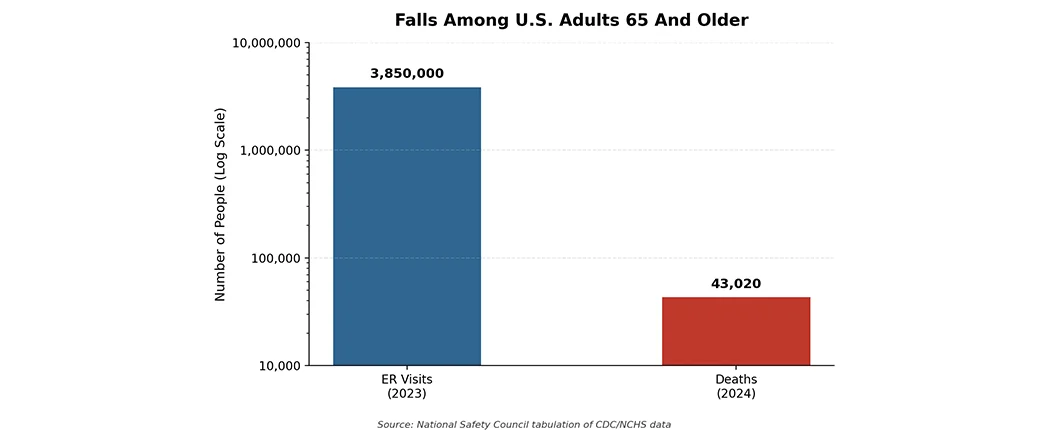
Figure 1. Falls among U.S. adults 65 and older.
Emergency department visits related to falls among older adults have risen 38 percent over the past decade, and fall-related deaths in this age group have risen 51 percent over the same period. These trends underscore why the severity of a slip and fall injury, particularly for an older client, often exceeds what the initial appearance of a fall might suggest.


Source: National Safety Council tabulation of CDC and National Center for Health Statistics data.
Where Charlotte Slip And Fall Claims Commonly Arise
- Grocery stores and big box retailers, particularly involving spills, wet floors near entrances, and debris in aisles
- Restaurants and bars, including spilled drinks, wet kitchen and bathroom floors, and poorly lit stairways
- Apartment complexes and condominiums, particularly in common areas such as stairwells, parking garages, and pool decks
- Office buildings and retail centers, including parking lots and garages with potholes or inadequate lighting
- Private homes, where a social guest is injured by a hazard the homeowner knew about but failed to address or warn about
Shopping centers and mixed-use developments common throughout Charlotte add a layer of complexity, since the specific location of a fall, inside a leased retail space, in a shared common area, or in a parking lot maintained by a separate management company, often determines which entity is actually responsible for maintenance at that spot. Identifying the correct party early, before evidence changes hands or gets lost between a landlord, tenant, and maintenance contractor, is a critical early step in a mixed-use property claim.
Evidence That Disappears Quickly After A Fall
Many Charlotte businesses use surveillance cameras that record over old footage on a fixed schedule, sometimes within just a few days or weeks. Maintenance and inspection logs, incident reports, and even the specific hazard itself, whether a spill, a loose floor tile, or debris in an aisle, can all be cleaned up, repaired, or discarded within hours of a fall. Sending a written request to preserve surveillance footage and related records as soon as possible after a fall is one of the most consequential steps in building a strong Charlotte slip and fall claim, since this evidence often directly resolves the notice and causation questions that determine whether a claim succeeds.
Multiple Potentially Responsible Parties
- The property owner, who generally bears ultimate responsibility for maintaining the premises in a reasonably safe condition
- A property management company, if one was retained to handle day-to-day maintenance and inspection
- A commercial tenant, such as a retail store or restaurant, for hazards within its own leased space
- A cleaning or maintenance contractor, if negligent cleaning, mopping, or repair work created or worsened the hazard
- A separate security or valet company, in cases where their own conduct or equipment contributed to the hazardous condition
Because more than one of these parties may carry separate liability insurance, correctly identifying every potentially responsible party can meaningfully affect how much compensation is actually available to resolve a serious injury claim.
Landlord And Tenant Responsibilities In Apartment Falls
Charlotte’s large rental market makes apartment complex falls a common type of claim, and responsibility often depends on where the fall occurred. A landlord generally remains responsible for maintaining common areas, including hallways, stairwells, parking lots, and shared amenities, and can be held liable for a fall caused by a hazard in these areas that the landlord knew or should have known about.
Falls inside a tenant’s unit are generally the tenant’s responsibility once they take possession, with an important exception for defects that existed when the lease began and were not reasonably discoverable during a normal inspection, sometimes called latent defects. A landlord who receives a maintenance request for a hazard, such as a broken stair rail or a leaking ceiling that creates a slip hazard, and fails to respond within a reasonable time can face liability even for a defect located inside a leased unit, since the failure to repair after notice is itself a separate basis for a claim.
Common Injuries In Charlotte Slip And Fall Cases
- Hip fractures, particularly serious and sometimes life-altering for older adults
- Wrist, arm, and shoulder fractures from an outstretched hand breaking a fall
- Traumatic brain injury and concussion from striking the head during a fall
- Spinal injuries, including herniated discs and, in severe cases, spinal cord damage
- Knee and ankle injuries, including ligament tears requiring surgical repair
Common Insurer Assumptions About Slip And Fall Claims Versus North Carolina Law
| Common Insurer Assumption | The Legal Reality In North Carolina |
| A posted warning sign automatically protects the business | A sign is relevant evidence but does not automatically defeat a claim; the adequacy and visibility of the specific warning still matters |
| The hazard was open and obvious, so there is no case | Open and obvious hazards create a real defense, but the outcome still depends on lighting, visibility, and the specific facts of the fall, not a blanket rule |
| The store had no way of knowing about the spill | Constructive notice can be established by showing the hazard existed long enough that a reasonable inspection routine should have caught it |
| A social guest owed less protection than a customer | North Carolina eliminated the invitee and licensee distinction in 1998; both are owed the same duty of reasonable care under Nelson v. Freeland |
Frequently Asked Questions
Common Concerns Before Calling A Slip And Fall Lawyer
The Store Said The Hazard Was Obvious, So I Assume I Have No Case
An insurer’s assertion that a hazard was open and obvious is a defense they are required to prove, not an automatic conclusion. Lighting conditions, the specific appearance of the hazard, and other facts particular to your fall can all affect whether this defense actually applies.
I Am Embarrassed About Falling In Public
This is an extremely common and understandable reaction, but it has no bearing on whether the property owner was negligent. Serious injuries from falls are common and are taken seriously by the legal system regardless of how the fall may have looked to bystanders. Insurance adjusters have no way to measure embarrassment, and it plays no role in whatever settlement value your claim actually has.


I Signed Something At The Store After My Fall
Depending on what you signed, this may or may not affect your rights. Many incident reports are simply a factual record and not a waiver of your right to pursue a claim, but this should be reviewed by an attorney rather than assumed either way.
What Happens When You Call The Watson Law Office
When you call (704) 885-5025, a member of The Watson Law Office team will ask about your fall, your injuries, and where the incident occurred. This conversation is free and carries no obligation. If your case is a good fit, you will be scheduled for a consultation with Attorney Kyle T. Watson, who can help you understand how North Carolina’s premises liability standards, including the open and obvious doctrine and the contributory negligence rule, apply to your specific situation. Bring any photographs you took, an incident report if one was completed, and the contact information of any witnesses so the consultation can move directly into evaluating your options.
